
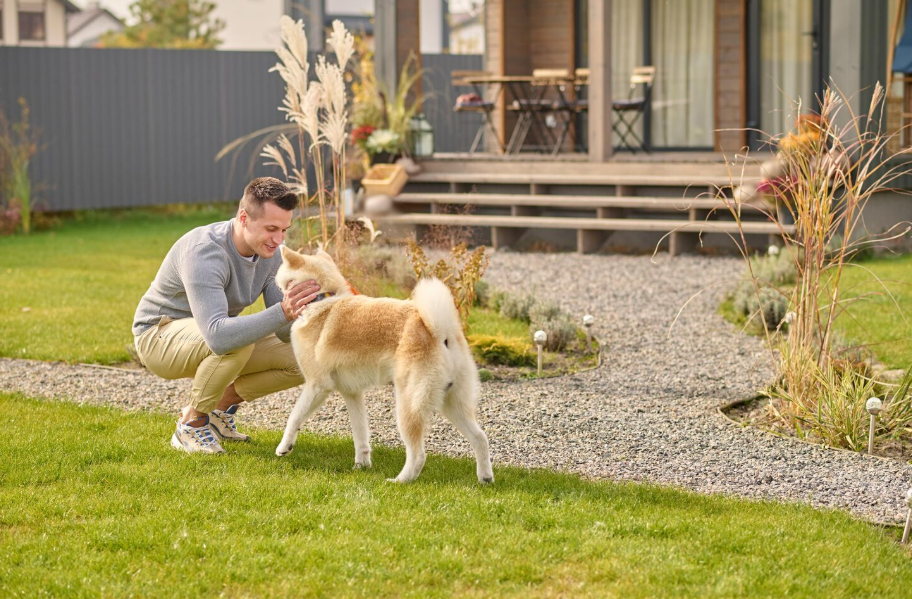
If you have dogs, you know the struggle. Natural grass turns into a mix of mud pits, brown spots, and bare patches in a matter of weeks. Water it more and you get mud. Water it less and you get dust and dead patches. For many homeowners, the solution has been switching to artificial turf for homes that’s built to handle pets. And in 2026, more people are discovering that used artificial turf does the job just as well for a fraction of the cost.
Here’s why artificial turf works for dogs, what to look for, and how to set it up so your yard stays clean, safe, and low maintenance.
What Makes Turf “Pet Friendly”
Not all artificial turf is created equal when it comes to pets. Pet friendly turf needs three things: fast drainage, odor resistance, and a surface that’s safe on paws.
Drainage matters because dog urine needs to pass through the turf quickly. If it sits, you get a smell and bacteria buildup. Good pet turf uses a porous backing and is installed over a base that drains well.
Odor resistance comes down to infill. Most used artificial turf from sports fields originally had crumb rubber or silica sand infill. For residential use, that infill is removed and replaced with pet-safe options like antimicrobial silica, zeolite, or Envirofill. These materials neutralize ammonia from urine and reduce smell.
Safety is about the fibers. Quality turf uses polyethylene or nylon blades that are soft, non-abrasive, and free of lead or other toxins. Reputable suppliers test used turf for wear and contaminants before reselling it, so you’re not getting something unsafe for pets.
Why Used Artificial Turf Is a Smart Choice for Dog Owners
The main reason people look at used artificial turf is cost. New pet turf installations average $8-$14 per sq ft installed. For a 400 sq ft dog run or backyard area, that’s $3,200-$5,600.
Used artificial turf cuts material costs by 70-85%. You pay $0.80-$2.50 per sq ft for the turf itself, and total installed costs usually land at $3-$5 per sq ft. That means a 400 sq ft dog area that would cost $4,800 new can be done for $1,600-$2,000.
But lower cost doesn’t mean lower performance for pet use. Sports fields see thousands of steps per day. A backyard with two or three dogs doesn’t. When turf is removed from a field, crews cut out the high-wear center areas and resell the side zones and end zones. Those sections have light wear and plenty of life left for residential use.
For artificial turf for homes, you don’t need FIFA-grade shock absorption or 10-year warranties. You need something that drains, stays clean, and holds up to running, digging, and sun. Used turf delivers that when it’s sourced and installed correctly.
Setting Up Used Turf for Dogs the Right Way
Installation is where pet friendly turf succeeds or fails. Skip the prep and you’ll get pooling, shifting, and smell issues no matter what material you use.
1. Remove and Prep the Base
Take out all existing grass, weeds, and topsoil to a depth of 3-4 inches. Grade the area so water flows away from the house. Lay a base of 3-4 inches of decomposed granite or crushed gravel and compact it thoroughly. This base is what gives you drainage and prevents sagging.
2. Choose the Right Infill
When buying used artificial turf for dogs, make sure the original infill has been removed. Replace it with pet-safe infill like zeolite or antimicrobial silica. Zeolite is especially good at trapping ammonia and cutting odor. Plan for 1-2 lbs per sq ft depending on the turf type.
3. Secure and Brush the Turf
Lay the turf, seam it if needed, and secure the edges with landscape staples or bender board. Brush the infill into the fibers so the blades stand upright. This keeps the surface springy and helps with drainage.
4. Plan for Cleaning
Even with good drainage and infill, you’ll need to rinse the area weekly with a hose. For heavier use, use an enzymatic cleaner once a month to break down any remaining organic matter. Avoid harsh chemicals that can break down the backing.
Where Used Turf Works Best for Pets
You don’t have to turf your entire yard to get the benefits. Most dog owners use used artificial turf for specific zones:
Dog Runs: A 10×20 ft area with shade, gravel drainage, and used turf gives dogs a clean place to go without tearing up the rest of the yard.
Potty Patches: A small 6×8 ft section near the side of the house is perfect for training and for small yards.
Play Areas: Combine turf with a shade sail and some toys for a low-maintenance play zone that won’t turn to mud.
Pathways: Line high-traffic paths with turf to stop mud tracking into the house.
Because used turf costs less, you can experiment with layout and expand later without a big financial hit.
What to Check Before You Buy
Not all used artificial turf is good for pets, so inspect before you buy. Here’s what to look for:
– Wear: Light fading is fine. Avoid rolls with bald spots, heavy matting, or thin areas.
– Odor: After washing, the turf should smell clean. A strong odor means it wasn’t processed properly.
– Backing: The backing should be intact with no tears. This holds the fibers in place.
– Source: Ask where it came from. Turf from soccer and baseball fields usually has lighter wear than football fields.
– Infill Removal: Confirm the original infill has been removed. You want to start fresh with pet-safe infill.
Reputable suppliers will provide photos, square footage, and details on cleaning and testing. If they can’t, move on.
The Other Benefits Homeowners Notice
Beyond being pet friendly turf, artificial turf cuts work and water use. You stop mowing, reseeding, and fighting brown spots. Most homeowners reduce outdoor water use by 50-70% after installation. In areas with water restrictions or tiered pricing, that adds up fast.
It’s also cleaner for the house. No mud on paws means less dirt tracked inside. And because the surface drains quickly, it dries faster after rain or cleaning.
From a sustainability angle, reusing turf keeps material out of landfills. Millions of square feet of usable turf get replaced every year because warranties expire, not because the material failed. Reusing it is one of the more practical ways to cut waste without giving up on a usable yard.
Who It’s Not For
Used artificial turf isn’t the right fit for every situation. If your HOA requires “new” materials for front yards, or if you need a 15-year warranty for a commercial property, go new. If you want a perfectly uniform, flawless lawn for resale photos, new turf will look cleaner.
But for backyards, side yards, and dog zones, the trade-off is minimal. You get 80-90% of the performance of new turf for 30% of the cost.
Final Word
Dogs and nice yards don’t have to be mutually exclusive. Used artificial turf gives you a durable, low-maintenance surface that handles pets without turning into a muddy mess. When it’s properly cleaned, installed over a good base, and paired with pet-safe infill, it performs just like new turf for a fraction of the price.
If you’re looking at artificial turf for homes and want something that actually works for dogs, get a quote on used artificial turf and see how far your budget goes. Once it’s down, you’ll spend less time cleaning paws and more time actually using the yard.
