
Sahara desert tour morocco stands as one of the world’s most captivating landscapes, where endless golden dunes create horizons of pure sculptural beauty and ancient caravan routes whisper stories of civilizations past. For travelers seeking authentic desert experiences, Morocco offers unparalleled opportunities to explore this legendary wilderness through carefully crafted tours that balance adventure, cultural immersion, and comfort. Whether embarking on comprehensive Sahara expeditions or focused three-day journeys from Marrakech, these desert tours deliver transformative encounters with landscapes, traditions, and natural wonders that have remained largely unchanged for millennia.
Understanding Sahara Desert Tours in Morocco
The Moroccan Sahara represents the western extension of Earth’s largest hot desert, encompassing diverse terrain from rocky hamadas to towering erg formations. Desert tours vary dramatically in duration, routing, and style from luxury expeditions with premium accommodations to authentic adventures emphasizing cultural immersion over creature comforts. The common thread connecting all quality Sahara tours is access to Erg Chebbi or Erg Chigaga, Morocco’s two principal sand seas where massive dunes create the iconic Saharan landscapes featured in countless photographs and films.
Erg Chebbi, near Merzouga in southeastern Morocco, rises dramatically from the surrounding rocky desert. These dunes reach heights exceeding 150 meters, creating spectacular formations that shift subtly with wind patterns while maintaining overall stability. The accessibility from major cities and developed tourism infrastructure make Erg Chebbi the most popular destination for Sahara tours, though this popularity hasn’t diminished the wilderness character that makes desert experiences profound.
Erg Chigaga, positioned deeper in the desert near M’Hamid, requires more challenging access but rewards adventurous travelers with greater isolation and authenticity. These dunes extend across wider areas with less infrastructure nearby, creating experiences where human presence feels minimal and wilderness dominates completely. Reaching Erg Chigaga often involves four-wheel-drive vehicles navigating trackless terrain, adding adventure elements that appeal to travelers seeking experiences beyond standard tourist circuits.
The Classic 3 Day Desert Tour from Marrakech
The three-day desert tour from Marrakech represents Morocco’s most popular desert itinerary, perfectly balancing comprehensive experiences with practical time constraints. This carefully paced journey traverses Morocco’s geographical diversity High Atlas mountains, ancient kasbahs, dramatic gorges, palm valleys, and finally the Sahara’s magnificent dunes all within a timeframe manageable for travelers with limited vacation days.
Day One: Marrakech to Dades Valley
Departures from Marrakech begin early, maximizing daylight for the spectacular High Atlas crossing. The route immediately ascends toward Tizi n’Tichka Pass, reaching 2,260 meters at the highest point. This engineering masterpiece reveals Morocco’s compressed topographical diversity as the road climbs through distinct vegetation zones from arid lowlands through walnut and almond groves into alpine environments where Berber villages seem to defy gravity.
The descent’s southern slopes introduce pre-Saharan landscapes where aridity intensifies and earth tones dominate. Aït Benhaddou emerges dramatically as a UNESCO World Heritage Site where earthen architecture cascades down hillsides in harmonious geometric patterns. This fortified ksar has served as backdrop for numerous films including “Gladiator” and “Game of Thrones,” though its authentic historical significance far exceeds Hollywood fame. Walking through labyrinthine passages reveals architectural sophistication where strategic design maximizes natural cooling while creating defensible structures that protected communities for centuries.
Continuing through Ouarzazate and the Valley of Roses toward Dades Valley, the landscape transitions constantly. The Dades Gorge presents geological drama where millennia of water erosion carved deep canyons through layered sedimentary rock. Evening arrival in Dades Valley provides sunset viewing as fading light transforms rock formations through constantly shifting color palettes, while traditional guesthouses or hotels offer comfortable overnight stays.
Day Two: Through Todra Gorge to the Sahara
Morning exploration of Dades Gorge reveals details missed during evening arrival: dramatic rock formations nicknamed “monkey fingers,” occasional greenery sustained by permanent water sources, and traditional Berber villages creating photographic opportunities at every turn. Departing toward Todra Gorge builds anticipation for one of Morocco’s most spectacular natural formations.
Todra Gorge narrows to a bottleneck where limestone cliffs soar 300 meters vertically while separated by merely 10 meters at the tightest points. This natural cathedral creates unique microclimates where cool, damp air persists even during scorching summer months. Permanent river flow sustains lush vegetation contrasting dramatically with surrounding aridity. Rock climbers tackle challenging routes up sheer walls, while casual visitors wade through shallow waters or simply absorb the overwhelming scale.
The journey continues across increasingly desert terrain through towns serving as gateways to Saharan regions. Erfoud’s fossil workshops showcase marine creatures preserved in limestone tangible evidence that areas now characterized by extreme aridity once lay beneath ancient oceans. Date palm oases become more frequent as the route approaches Merzouga and the magnificent Erg Chebbi dunes.
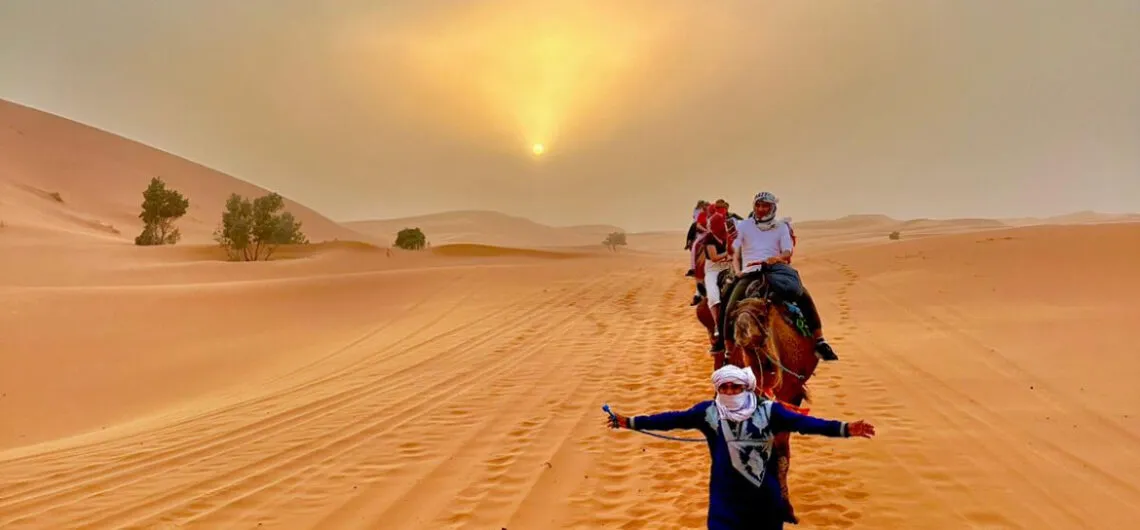
The first views of Erg Chebbi inspire genuine awe. Golden sand mountains rising over 150 meters create horizons of pure sculptural beauty. Arriving at desert-edge accommodations, travelers typically transfer to camels for sunset treks into the dune sea. The rhythmic swaying atop these patient animals, combined with spectacular light painting dunes in ever-changing hues, creates moments of profound beauty and tranquility.
Desert camps range from authentic Berber-style tents to luxury accommodations featuring proper beds, en-suite bathrooms, and gourmet dining. Regardless of amenity levels, evenings follow similar patterns: traditional tagine dinners cooked in underground ovens, Berber music performances around campfires featuring drums and traditional songs, and stargazing under skies revealing celestial displays impossible near urban light pollution. The Milky Way appears as a luminous river, while meteor showers and satellite passages provide natural entertainment.
Day Three: Desert Dawn and Return to Marrakech
Pre-dawn wake-up calls allow witnessing Saharan sunrise a transcendent experience as darkness yields to light through subtle color progressions transforming dunes from deep purple through rose and amber to brilliant gold. The temperature differential between night cold and emerging warmth creates otherworldly atmospheric conditions where sound carries unnaturally and distance becomes difficult to judge.
Post-sunrise activities might include sandboarding down steep dune faces, exploring nearby fossil sites, or visiting Khamlia village where Gnawa musicians descendants of sub-Saharan peoples perform hypnotic traditional music blending African rhythms with Berber and Arabic influences. Some tours incorporate visits to nomadic families maintaining traditional lifestyles, providing cultural insights into desert survival strategies developed over generations.
The return journey to Marrakech follows the spectacular Ziz Valley, a 20-kilometer palm oasis creating a verdant ribbon through an otherwise barren landscape. This ancient corridor sustained trans-Saharan trade caravans for centuries, and fortified settlements positioned along its length demonstrate strategic importance throughout history. The Ziz River maintains permanent flow despite extreme evaporation rates, supporting extensive date palm cultivation and traditional irrigation systems demonstrating agricultural knowledge accumulated over countless generations.
Strategic viewpoints overlook the valley’s full expanse, revealing remarkable contrasts between lush palm groves and surrounding rocky desert. Continuing through Midelt and recrossing Tizi n’Tichka Pass completes the circuit, with arrival in Marrakech typically occurring during evening hours. The route covers over 560 kilometers each direction, and while modern roads make this journey feasible in three days, the pace remains demanding but richly rewarding.
Extended Sahara Desert Tours: Deeper Immersion
While three-day tours provide excellent desert introductions, extended Sahara expeditions permit deeper exploration and more relaxed pacing. Four to seven-day tours incorporate additional destinations Fes, Chefchaouen, coastal cities creating comprehensive Moroccan circuits. Multiple nights in desert camps allow full immersion in Saharan rhythms where sunrise and sunset dictate activities rather than rigid schedules.
Extended tours often include activities impossible in shorter itineraries. Multi-day camel treks venture deeper into sand seas, reaching areas where vehicle access remains impossible and human presence becomes truly minimal. Four-wheel-drive expeditions explore remote regions like Erg Chigaga, navigating trackless terrain where GPS and experienced drivers prove essential. These adventures appeal to travelers seeking authentic wilderness encounters beyond standard tourist experiences.
Photography-focused tours cater to serious enthusiasts, positioning participants in optimal locations during golden hours when light quality reaches peak levels. Guides understand composition, exposure challenges in high-contrast desert environments, and patience required for capturing wildlife or perfect dune formations. Night photography sessions teach techniques for capturing star trails, Milky Way compositions, and long-exposure landscapes under celestial brilliance.
Cultural Dimensions of Sahara Desert Tours
Quality Sahara tours transcend scenic appreciation, incorporating meaningful cultural encounters with Berber communities maintaining traditional desert lifestyles. Visits to local families when conducted through established relationships respecting dignity and privacy provide insights into daily realities of desert existence. Guests might observe traditional bread baking in sand ovens, witness carpet weaving techniques passed through generations, or participate in mint tea ceremonies where hospitality rituals create social bonds.
Berber music and storytelling traditions come alive during desert evenings. Professional musicians perform on traditional instruments including the bendir (frame drum), guembri (three-stringed lute), and qarqaba (metal castanets), creating hypnotic rhythms that seem to emerge from the desert itself. Storytellers recount ancient tales of desert spirits, legendary heroes, and moral lessons transmitted orally for centuries before written language became widespread.
Understanding desert ecology enhances appreciation for the harsh beauty surrounding travelers. Despite appearances of barren lifelessness, the Sahara supports surprising biodiversity. Fennec foxes hunt nocturnally with oversized ears that dissipate heat and amplify prey sounds. Scarab beetles roll dung balls across sand, performing ecosystem services essential for nutrient cycling. Desert-adapted plants like spurge and acacia develop specialized survival strategies deep root systems, waxy coatings reducing moisture loss, and dormancy periods waiting for rare rainfall before explosive growth and reproduction.
Practical Considerations for Desert Tours
Successful Sahara tours require thoughtful preparation. Temperature extremes characterize desert environments, scorching days often exceeding 110°F (43°C) during summer months, while winter nights can drop below freezing. Layered clothing proves essential, allowing adaptation as conditions change throughout days and seasons. Sun protection including high-SPF sunscreen, sunglasses, and head coverings prevents burns and heat-related illness in environments where UV exposure intensifies through altitude and sand reflection.
Comfortable footwear matters significantly. Closed-toe shoes protect feet during ksar exploration and prevent sand burns when walking on sun-heated dunes, though sandals provide relief during long drives. Small backpacks should contain water bottles, snacks, medications, and camera equipment, as access to supplies becomes limited outside major towns.
Timing dramatically impacts experience quality. Spring (March-May) and autumn (September-November) offer ideal weather conditions with moderate temperatures, occasional wildflower blooms transforming normally barren landscapes, and comfortable desert nights. Summer (June-August) brings extreme heat making midday activities uncomfortable and potentially dangerous, though dawn and dusk remain spectacular. Winter (December-February) provides comfortable daytime temperatures but requires serious cold-weather gear for desert nights where temperatures plummet once the sun sets.
Photography equipment should include wide-angle lenses for capturing expansive landscapes, telephoto options for distant kasbahs and wildlife, and protection against sand infiltration. Dust storms can damage sensitive electronics, making protective bags and cleaning supplies essential. The constantly changing light conditions reward photographers who understand golden hour timing and shadow composition principles.
Choosing the Right Tour Operator
Selecting quality tour operators significantly impacts desert experience satisfaction. Reputable companies employ experienced drivers familiar with mountain roads and desert navigation, knowledgeable guides who transform sightseeing into educational experiences, and maintain vehicles to high safety standards. Reading recent reviews on independent platforms provides insights into actual service quality versus marketing promises.
Transparent pricing eliminates unpleasant surprises. Quality operators clearly outline accommodations, meals, activities, entrance fees and any exclusions like drinks, tips, or optional activities. The cheapest options often compromise on guide quality, accommodation standards, or vehicle condition, ultimately diminishing experiences. Mid-range to premium operators generally deliver better value through superior service, flexibility, and attention to detail.
Small group sizes enhance experiences considerably. Tours limited to 6-8 participants allow more personal attention, flexibility in scheduling, and easier logistics than large groups requiring extensive coordination. Private tours offer ultimate flexibility, crafting itineraries responding to specific interests and allowing spontaneous adjustments based on opportunities that arise.
Conclusion
Sahara desert tours in Morocco, particularly the popular 3 day desert tour marrakech, deliver transformative travel experiences where natural beauty, cultural authenticity, and adventure converge. From traversing the High Atlas mountains to exploring ancient kasbahs, dramatic gorges, and finally the Sahara’s magnificent dunes, these journeys reveal Morocco’s extraordinary diversity compressed into carefully paced itineraries. Whether choosing focused three-day introductions or extended expeditions permitting deeper immersion, quality desert tours create profound connections with landscapes that have captivated travelers for millennia and memories that inspire storytelling for years afterward.
Key Takeaways
Perfect Introduction: Three-day tours from Marrakech provide comprehensive desert experiences within practical timeframes, balancing adventure, culture, and comfort while covering Morocco’s geographical diversity from mountains to dunes.
Geographical Diversity: Routes traverse High Atlas peaks, UNESCO heritage kasbahs, spectacular gorges, palm valleys, and Saharan dunes, showcasing Morocco’s compressed natural variety rivaling entire regions elsewhere.
Cultural Immersion: Quality tours incorporate meaningful Berber community encounters, traditional music performances, and insights into desert survival strategies, transcending mere scenic appreciation to deliver authentic cultural understanding.
Seasonal Considerations: Spring and autumn offer optimal conditions with moderate temperatures and spectacular lighting, while summer brings extreme heat and winter requires cold-weather preparation despite comfortable daytime conditions.
Operator Selection: Choosing reputable companies with experienced guides, quality vehicles, transparent pricing, and small group sizes dramatically enhances satisfaction, making mid-range to premium options worthwhile investments over budget alternatives.
