
The Sacred Valley of the Incas, known locally as Urubamba Valley, stretches along the Urubamba River between Cusco and Machu Picchu, creating a corridor of extraordinary beauty, archaeological significance, and living indigenous culture that served as the agricultural and spiritual heartland of the Inca Empire. This fertile valley, sitting at lower elevations than Cusco yet surrounded by towering Andean peaks, offers travelers far more than a convenient base for Machu Picchu excursions it represents a destination worthy of extended exploration where ancient ruins coexist with traditional markets, terraced hillsides still yield crops using centuries-old techniques, and Quechua-speaking communities maintain cultural continuity spanning generations. Understanding the Sacred Valley’s geographic extent, major attractions, cultural significance, and strategic advantages transforms this region from a logistical stepping stone into an essential component of comprehensive Peruvian experiences.
Geographic and Historical Context
The Sacred Valley extends approximately 60 kilometers along the Urubamba River, encompassing elevations from 2,050 to 2,900 meters, significantly lower than Cusco’s 3,400 meters. This elevation difference creates warmer temperatures, more oxygen availability, and gentler conditions for acclimatization, making the valley an ideal initial destination for travelers arriving from sea level before ascending to higher altitudes.
The Incas recognized the valley’s exceptional characteristics: fertile alluvial soils enriched by river flooding, reliable water sources for irrigation, microclimates supporting diverse crops, and strategic positioning connecting Cusco with jungle lowlands and the route to Machu Picchu. They transformed natural advantages through massive engineering projects: agricultural terracing maximizing arable land on steep slopes, sophisticated irrigation systems distributing water efficiently, ceremonial centers aligned with astronomical phenomena, and fortifications protecting this vital region.
The valley’s sacred designation reflected both practical and spiritual significance. The Urubamba River represented the earthly manifestation of the Milky Way in Inca cosmology, while the surrounding peaks Apu Pitusiray, Apu Chicón, and others served as powerful mountain deities requiring reverence and offerings. This integration of practical agriculture, strategic importance, and profound spirituality created landscapes where function and faith merged inseparably.
Major Towns and Their Distinct Characters
Pisac: Markets and Mountaintop Ruins
Pisac serves dual roles as traditional Andean town and tourist center, famous for its Sunday market drawing villagers from surrounding communities to trade agricultural products, textiles, and handicrafts. While the market has evolved to accommodate tourist demand with stalls selling alpaca sweaters and jewelry alongside traditional goods, it retains authentic elements where locals conduct business in Quechua and exchange continues using traditional barter practices.
Above the town, the Pisac archaeological site sprawls across mountain ridges with agricultural terraces, ceremonial platforms, residential sectors, and ceremonial centers connected by stone pathways. The site’s positioning provided defensive advantages while creating ceremonial spaces aligned with astronomical events significant to Inca agricultural and religious calendars. The climb from town to ruins takes 1-2 hours, though taxis provide access for those preferring to explore without the steep ascent.
Ollantaytambo: Living Inca Town
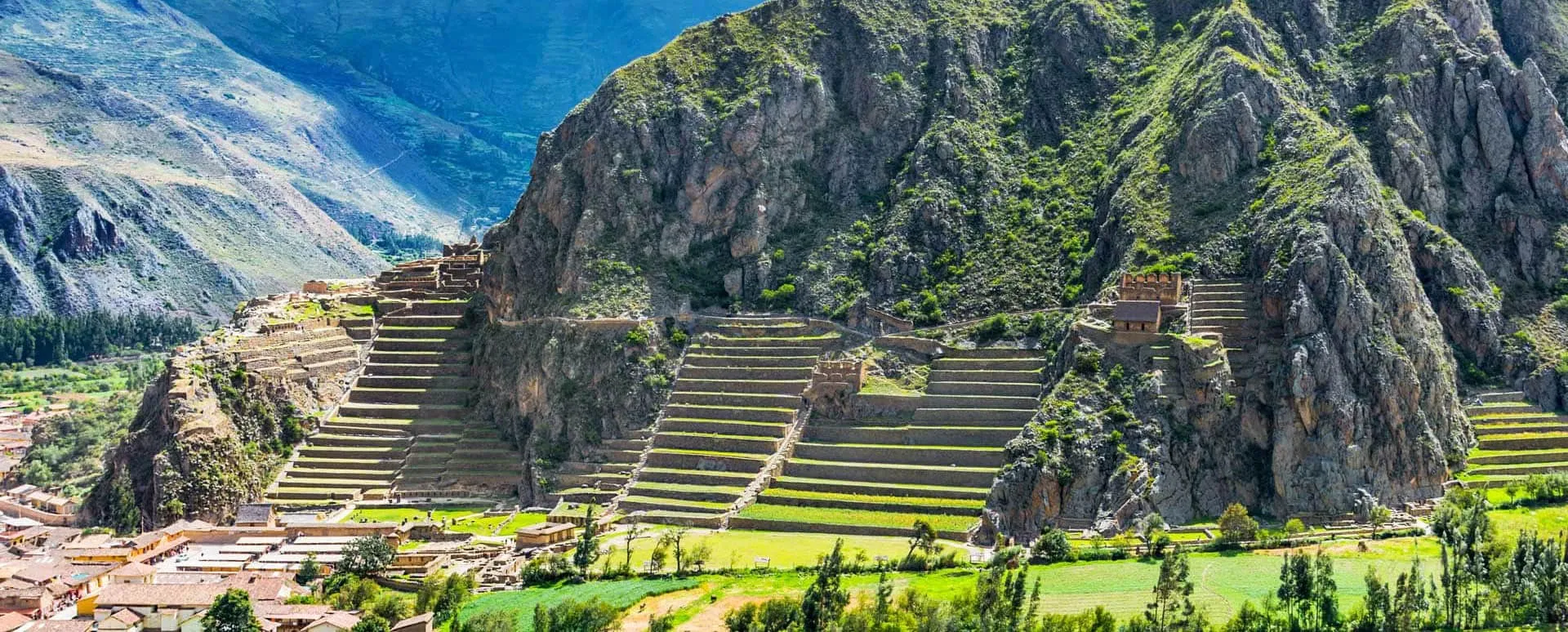
Ollantaytambo represents the Sacred Valley’s most architecturally intact Inca settlement, where descendants of the original inhabitants still occupy ancient stone buildings arranged along original Inca street plans. Walking through Ollantaytambo’s narrow cobblestone alleys flanked by massive stone walls feels like stepping directly into the 15th century, creating immersive experiences that more heavily modernized towns cannot provide.
The town’s archaeological complex rises dramatically from the plaza, featuring massive terraces ascending to the Temple of the Sun where six monumental pink granite monoliths demonstrate the Incas’ extraordinary stone-working capabilities. These stones, quarried from sites across the valley and transported using techniques still debated by engineers, were carved with such precision that no mortar was needed in their assembly.
Ollantaytambo functioned as both temple complex and fortress, with its elevated position providing defensive advantages demonstrated during the 1536 battle where Inca forces led by Manco Inca temporarily defeated Spanish conquistadors, one of few Inca military victories during the conquest period. The site’s strategic importance extends to modern times as the primary departure point for trains to Machu Picchu.
Urubamba: Agricultural Heart
Urubamba, the valley’s largest town, maintains a more authentically Peruvian character with less tourism development than Pisac or Ollantaytambo. The town serves primarily as a service center for surrounding agricultural communities, though several upscale hotels have established themselves in the countryside nearby, catering to travelers seeking comfortable bases for valley exploration.
The Urubamba area lacks major archaeological sites but offers proximity to lesser-known ruins, salt mines at Maras, and the agricultural terraces at Moray. The town’s lower elevation (2,871 meters) makes it particularly suitable for initial acclimatization, and its central position allows easy access to attractions throughout the valley.
Essential Archaeological Sites
Moray: Agricultural Laboratory
The circular agricultural terraces at Moray represent one of the Incas’ most sophisticated engineering achievements. The site features concentric terraces descending into bowl-shaped depressions, creating microclimates with temperature variations up to 15°C between top and bottom levels. Archaeologists theorize the Incas used Moray as an agricultural research station, testing crop varieties at different temperature and moisture conditions to determine optimal growing environments before expanding cultivation throughout the empire.
Each terrace level recreated conditions found at different elevations across Inca territory, allowing experimentation without travel to distant regions. This systematic approach to agricultural science demonstrates technological sophistication rivaling contemporary civilizations yet achieved without written language or wheeled transport.
Maras Salt Mines
The Maras salt pans, in operation since pre-Inca times, cascade down a mountainside in thousands of small pools fed by a naturally saline underground spring. The evaporation process concentrating salt in shallow pools continues using techniques unchanged for centuries, with local families maintaining hereditary rights to specific pools and harvesting salt during dry season months.
Visiting Maras provides insights into sustainable resource management and economic systems predating Spanish colonization. The pink-hued Andean salt produced here commands premium prices in gourmet markets worldwide, transforming ancient traditions into contemporary economic opportunities while preserving cultural practices and landscapes.
Chinchero: Weaving Traditions
Chinchero combines Inca ruins with colonial architecture and living textile traditions, where women demonstrate ancient weaving techniques using backstrap looms and natural dyes derived from local plants and minerals. The Sunday market showcases traditional textiles alongside agricultural products, providing authentic cultural experiences less commercialized than Pisac’s tourist-oriented stalls.
The archaeological site features terraces and stone walls surrounding a colonial church built atop Inca foundations, a common Spanish practice symbolizing religious and political dominance. However, Chinchero’s cultural significance extends beyond ruins to the living traditions maintained by contemporary weavers whose patterns and techniques connect directly to pre-Columbian practices.
Strategic Advantages as a Base
Acclimatization Benefits
The Sacred Valley’s lower elevation compared to Cusco creates gentler acclimatization conditions for travelers arriving from sea level. Spending initial days in Urubamba (2,871 meters) or Ollantaytambo (2,792 meters) before ascending to Cusco (3,400 meters) allows gradual altitude adaptation reducing acute mountain sickness risks.
Many experienced Peru travelers now reverse traditional itineraries, flying into Cusco but immediately transferring to the Sacred Valley for 2-3 days before returning to explore Cusco at altitude. This approach maximizes comfort and minimizes altitude-related health issues that can diminish experiences when ascending too rapidly.
Central Access to Attractions
The valley’s linear geography along the Urubamba River creates efficient access to multiple sites within short distances. From Urubamba, travelers reach Pisac (30 minutes), Ollantaytambo (25 minutes), Moray (30 minutes), and Maras (40 minutes) easily as day trips, while Cusco sits only 90 minutes away via scenic mountain roads.
This centralized positioning allows comprehensive regional exploration from single accommodation bases, eliminating the frequent hotel changes that create logistical complexity and packing fatigue during multi-destination itineraries.
Climate and Comfort
The valley’s lower elevation and river valley positioning create warmer, more temperate conditions than Cusco’s high-altitude environment. Daytime temperatures typically range 18-22°C year-round, pleasant for exploration without the chill that often characterizes Cusco mornings and evenings. Agricultural productivity in the valley reflects these favorable conditions, with abundant produce including giant corn kernels, quinoa, potatoes, and fruits thriving in the fertile environment.
Cultural Immersion Opportunities
Traditional Markets
Weekly markets rotating through Sacred Valley towns Pisac on Sundays, Urubamba on Wednesdays, Chinchero on Sundays provide windows into contemporary Andean life where indigenous communities conduct commerce much as their ancestors did. While tourism has influenced market character, particularly in Pisac, the core economic and social functions persist with locals trading goods, sharing news, and maintaining community bonds through market participation.
Respectful market engagement means asking permission before photographing, purchasing items at fair prices rather than aggressive bargaining that undervalues artisan labor, and recognizing that these markets serve community functions beyond tourist entertainment.
Homestay Programs
Several Sacred Valley communities offer homestay programs where travelers stay with local families, participating in daily activities including agricultural work, cooking traditional meals, and learning Quechua language basics. These immersive experiences provide authentic cultural insights impossible through hotel-based tourism, while generating income supporting rural families and creating economic incentives for cultural preservation.
Homestays require openness to basic accommodations, vegetarian diets (meat rarely features in rural highland cooking), and willingness to engage genuinely with host families despite language barriers and cultural differences.
Agricultural Tourism
Working farms throughout the valley welcome visitors interested in organic agriculture, traditional crop varieties, and sustainable farming practices adapted to mountain environments. These agro-tourism initiatives educate travelers about Andean agricultural wisdom while supporting farmers transitioning from conventional to organic methods and creating economic alternatives to urban migration.
Practical Considerations for Valley Exploration
Transportation Options
Collectivos (shared minivans) connect valley towns frequently and cheaply (10-15 soles per journey), though departures follow demand rather than fixed schedules and comfort levels remain basic. Private taxis offer flexibility and comfort at modest costs (100-150 soles for half-day valley tours from Urubamba), while organized tours (150-250 soles per person) include guides providing historical and cultural context that independent exploration misses.
For maximum flexibility, rental cars enable self-paced exploration, though Peruvian driving customs and occasional road conditions challenge some international drivers. The valley’s relatively straightforward geography with a single main road following the river makes navigation simpler than in more complex regions.
Accommodation Strategy
The Sacred Valley offers accommodation spanning backpacker hostels (30-50 soles nightly) to ultra-luxury resorts (500+ soles). Mid-range options in Urubamba and Ollantaytambo (150-300 soles) provide comfortable bases with amenities including hot water, WiFi, and breakfast while maintaining reasonable budgets.
Location choices reflect different priorities: Urubamba’s central position and amenities versus Ollantaytambo’s atmospheric Inca town character and immediate train access to Machu Picchu versus Pisac’s smaller scale and Sunday market proximity.
Timing and Seasonality
Dry season (May-September) provides optimal conditions with minimal rain and clear mountain views justifying higher prices and larger crowds. Shoulder seasons (April, October) offer acceptable weather with fewer tourists and reduced costs. Wet season (November-March) brings afternoon rains that clear by evening, lush green landscapes, and substantially lower prices appealing to budget travelers and those unconcerned by occasional showers.
Sunday market days draw larger crowds to Pisac and Chinchero, creating vibrant atmospheres but also congestion. Mid-week visits to these towns reveal quieter, more authentic daily life rhythms that Sunday tourism obscures.
Conclusion
The Sacred Valley of the Incas transcends its common characterization as merely a Machu Picchu staging area, revealing itself as a destination worthy of extended exploration where archaeological wonders, living indigenous culture, stunning mountain landscapes, and comfortable acclimatization conditions converge. The valley’s towns each offer distinct characters Pisac’s market energy, Ollantaytambo’s architectural preservation, Urubamba’s agricultural authenticity while surrounding sites demonstrate Inca engineering genius and agricultural sophistication.
Strategic advantages including lower elevation for acclimatization, central positioning enabling efficient multi-site access, and temperate climate enhancing comfort make the Sacred Valley an ideal base for comprehensive Cusco region exploration. When approached not as a logistics necessity but as an integral destination deserving multiple days of attention, the Sacred Valley reveals layers of beauty, history, and cultural continuity that illuminate both Inca achievements and the contemporary communities maintaining traditions connecting directly to their ancestors’ wisdom.
Frequently Asked Questions
How many days should I spend in the Sacred Valley?
Allocate a minimum 2-3 days for comfortable exploration of major sites (Pisac, Ollantaytambo, Moray, Maras) without rushing. Four to five days allows deeper immersion including market visits, lesser-known ruins, cultural activities, and acclimatization before ascending to Cusco or starting treks. The valley deserves more than quick day trips from Cusco.
Is the Sacred Valley better for acclimatization than Cusco?
Yes, significantly. Sacred Valley towns sit 500-600 meters lower than Cusco (Urubamba at 2,871m vs Cusco at 3,400m), providing gentler altitude adaptation. Many travelers now spend the first 2-3 Peru days in the valley before ascending to Cusco, reducing acute mountain sickness risks while exploring attractions.
Can I visit the Sacred Valley independently or do I need tours?
Independent exploration is entirely feasible using collective (shared vans) connecting valley towns or rental cars for maximum flexibility. However, guided tours provide historical and cultural context that significantly enriches experiences at archaeological sites where signage offers minimal information. Consider combining independent transport with site-specific guides.
What’s the best base town in the Sacred Valley?
Urubamba offers central positioning, good amenities, and authentic Peruvian character with less tourism development. Ollantaytambo provides atmospheric Inca town character and train access to Machu Picchu. Pisac suits those prioritizing Sunday market proximity. Choose based on priorities logistics, atmosphere, or market access.
Do I need a Boleto Turístico to visit Sacred Valley sites?
The Cusco Boleto Turístico (tourist ticket) covers many Sacred Valley sites including Pisac, Ollantaytambo, Chinchero, and Moray. The partial ticket (70 soles, valid 2 days) includes valley sites, while the full ticket (130 soles, valid 10 days) adds Cusco attractions. Purchase in Cusco or at first site visited. Maras salt mines charge separate admission (10 soles).
