
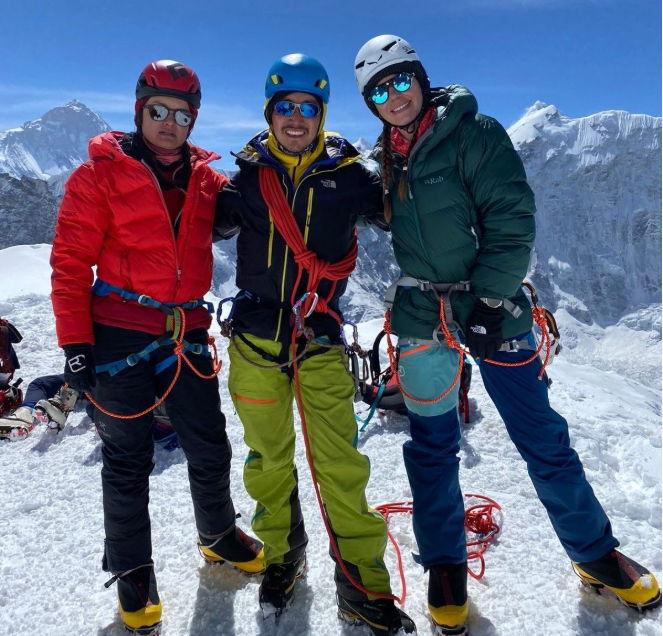
Island Peak Climbing (Imja Tse) stands majestically at 6,189 meters (20,305 feet) in Nepal’s Everest region, offering adventurers a perfect introduction to Himalayan mountaineering. This stunning peak earned its name from British explorers in 1953 who observed its striking resemblance to an island rising from a sea of ice. Today, it ranks among Nepal’s most sought-after trekking peaks, attracting thousands of climbing enthusiasts annually who seek to test their skills while experiencing breathtaking Himalayan landscapes.
Why Choose Island Peak?
Island Peak presents the ideal challenge for trekkers looking to transition into mountaineering. Its strategic location in the Everest region means climbers enjoy panoramic views of some of the world’s highest mountains, including Everest, Lhotse, Nuptse, and Makalu. The peak provides technical climbing challenges without extreme altitude complications, making it perfect for adventurers with moderate experience.
The climbing route combines diverse terrain—from scenic trekking paths through traditional Sherpa villages to glacial traverses and technical sections requiring ice axes, crampons, and rope techniques. This variety delivers an authentic Himalayan mountaineering experience while remaining accessible to determined climbers with reasonable fitness levels.
Best Time for Island Peak Climbing
Two distinct seasons offer optimal climbing conditions:
Pre-monsoon (Spring): March to May
- Moderate temperatures with days typically ranging from 10-15°C (50-59°F)
- Spectacular rhododendron blooms along lower elevation trails
- Generally stable weather with increasing temperatures as summer approaches
- Busier trails with more climbing groups
Post-monsoon (Autumn): September to November
- Crisp, clear days with exceptional mountain visibility
- Slightly cooler temperatures, typically 5-12°C (41-54°F)
- Stable weather patterns with minimal precipitation
- Vibrant festivals like Dashain and Tihar in local villages
While technically possible year-round, winter climbs (December-February) face extreme cold and high winds, while summer attempts (June-August) contend with monsoon precipitation and reduced visibility. Most commercial expeditions operate exclusively during the optimal spring and autumn windows.
Island Peak Climbing Cost Breakdown
Island Peak Climbing Cost varies significantly based on service level, group size, and route selection. Here’s a comprehensive breakdown to help plan your budget:
Budget Expeditions: $1,800-$2,500
- Basic services with larger groups (6-12 climbers)
- Limited equipment support
- Shared accommodations in basic teahouses/lodges
- Standard meals without many extras
- Minimal training prior to summit attempt
- Limited flexibility for acclimatization
Standard Expeditions: $2,500-$3,500
- Medium-sized groups (4-8 climbers)
- Complete climbing equipment package
- Mixed accommodation (better teahouses, quality tents)
- Varied meal options with some dietary accommodations
- Proper acclimatization schedule
- Basic training day before summit attempt
Premium Expeditions: $3,500-$5,000+
- Smaller groups (2-4 climbers) with personalized attention
- Comprehensive equipment package with backup options
- Superior accommodations throughout
- High-quality meals with extensive dietary options
- Flexible itinerary for optimal acclimatization
- Multiple training sessions prior to summit attempt
- Enhanced safety measures with additional support staff
Essential Cost Factors
Permits and Fees: $500-$700
- Island Peak climbing permit: $250 (spring), $125 (autumn)
- Sagarmatha National Park entry fee: $30
- Khumbu Pasang Lhamu Rural Municipality fee: $20
- TIMS (Trekker’s Information Management System) card: $10
- Garbage deposit (refundable): $250
Equipment: $300-$1,200
- Personal climbing gear (if renting): $300-$500
- High-quality clothing and accessories (if purchasing): $800-$1,200
Additional Expenses:
- International flights to Kathmandu: $700-$1,500
- Domestic flights (Kathmandu-Lukla roundtrip): $350-$400
- Personal expenses and souvenirs: $200-$500
- Tips for guides and porters: $200-$400 (customary)
- Travel and rescue insurance: $100-$200
Comprehensive Island Peak Climbing Itinerary
Island Peak Climbing Itinerary The following 16-day itinerary incorporates essential acclimatization days and technical preparation:
Day 1: Arrival in Kathmandu (1,400m) Orientation meeting with climbing team, equipment check, permit processing
Day 2: Fly to Lukla (2,840m) and trek to Phakding (2,610m) 35-minute scenic flight followed by 3-4 hour easy trek
Day 3: Trek to Namche Bazaar (3,440m) 6-7 hour trek including initial steep climb to the Sherpa capital
Day 4: Acclimatization in Namche Bazaar Day hike to Everest View Hotel (3,880m) or Khumjung village with first views of Everest
Day 5: Trek to Tengboche (3,860m) 5-6 hour trek featuring the region’s largest Buddhist monastery
Day 6: Trek to Dingboche (4,410m) 5-6 hour trek through alpine terrain with expansive mountain vistas
Day 7: Acclimatization in Dingboche Hike to Nangkartshang Peak (5,083m) for panoramic views before returning to Dingboche
Day 8: Trek to Chhukung (4,730m) 3-4 hour trek through high-altitude landscape with views of Island Peak
Day 9: Technical Training Day Practice essential climbing techniques: rope management, crampon usage, harness adjustment, ascending fixed lines
Day 10: Trek to Island Peak Base Camp (5,087m) 3-4 hour trek to establish camp beneath the imposing peak
Day 11: Pre-summit Preparation Equipment review, route briefing, early dinner, and rest before midnight wake-up
Day 12: Summit Day (6,189m) and return to Chhukung 12-14 hour challenging day beginning at midnight, summiting at sunrise, and descending
Day 13: Contingency/Rest Day Reserve day for weather delays or extended recovery
Day 14: Trek to Namche Bazaar (3,440m) 7-8 hour descent through familiar terrain
Day 15: Trek to Lukla (2,840m) 6-7 hour final trekking day
Day 16: Fly to Kathmandu Morning flight concluding the expedition
Essential Preparation for Island Peak
Physical Fitness Requirements:
- Cardiovascular endurance: Regular cardio training 3-4 times weekly for 3+ months
- Leg strength: Regular hiking with weighted pack (10-15kg)
- Upper body conditioning: Focus on core and upper body for managing fixed ropes
- Altitude experience: Previous trekking experience above 4,000m highly recommended
Technical Skills:
- Basic crampon and ice axe techniques
- Rope management fundamentals
- Ascending and descending fixed lines
- Proper use of climbing harness and carabiners
Recommended Equipment:
- High-quality mountaineering boots compatible with crampons
- Four-season sleeping bag (-20°C rating)
- Layered clothing system including down jacket
- Technical climbing equipment (often available for rent)
- Comprehensive first-aid kit including altitude medications
Conclusion
Island Peak offers the perfect blend of challenge and accessibility for aspiring mountaineers. While demanding proper preparation and respect, this majestic Himalayan summit provides an unforgettable experience combining cultural immersion, spectacular landscapes, and personal achievement. With appropriate physical conditioning, technical preparation, and mental determination, climbers are rewarded with standing atop a true Himalayan peak—an accomplishment few ever experience.
Frequently Asked Questions
How difficult is climbing Island Peak? Island Peak is classified as a “trekking peak” but requires technical climbing skills. The difficulty rating is PD+ (Peu Difficile Plus) in the Alpine grading system. Most climbers find the 100-meter headwall with fixed ropes (45-55 degree incline) the most challenging section. Previous mountaineering experience is beneficial but not mandatory with proper training.
Do I need prior climbing experience? While prior experience is advantageous, many companies accept first-time climbers with strong trekking backgrounds. Most expeditions include a training day before the summit attempt to practice essential techniques. Participants should be comfortable with heights and physically fit.
What success rate do climbers have on Island Peak? The overall success rate ranges between 60-75%, depending largely on weather conditions, individual fitness, and proper acclimatization. Groups that incorporate adequate acclimatization days and technical training see significantly higher success rates.
Is altitude sickness a concern? Yes, altitude-related issues represent the primary health risk. The itinerary includes strategic acclimatization days to mitigate this risk. Climbers should familiarize themselves with altitude sickness symptoms and communicate openly with guides if experiencing problems.
Can I climb Island Peak solo? Legally, solo climbing requires the same permits as guided expeditions. However, it’s strongly discouraged unless you possess extensive high-altitude mountaineering experience. Nepal’s regulations increasingly emphasize guided climbs for safety reasons.
What happens if weather prevents summit day? Most itineraries include a contingency day specifically for weather delays. If conditions remain unsuitable beyond the contingency period, operators typically offer partial refunds or credits toward future expeditions, though policies vary considerably between companies.
