
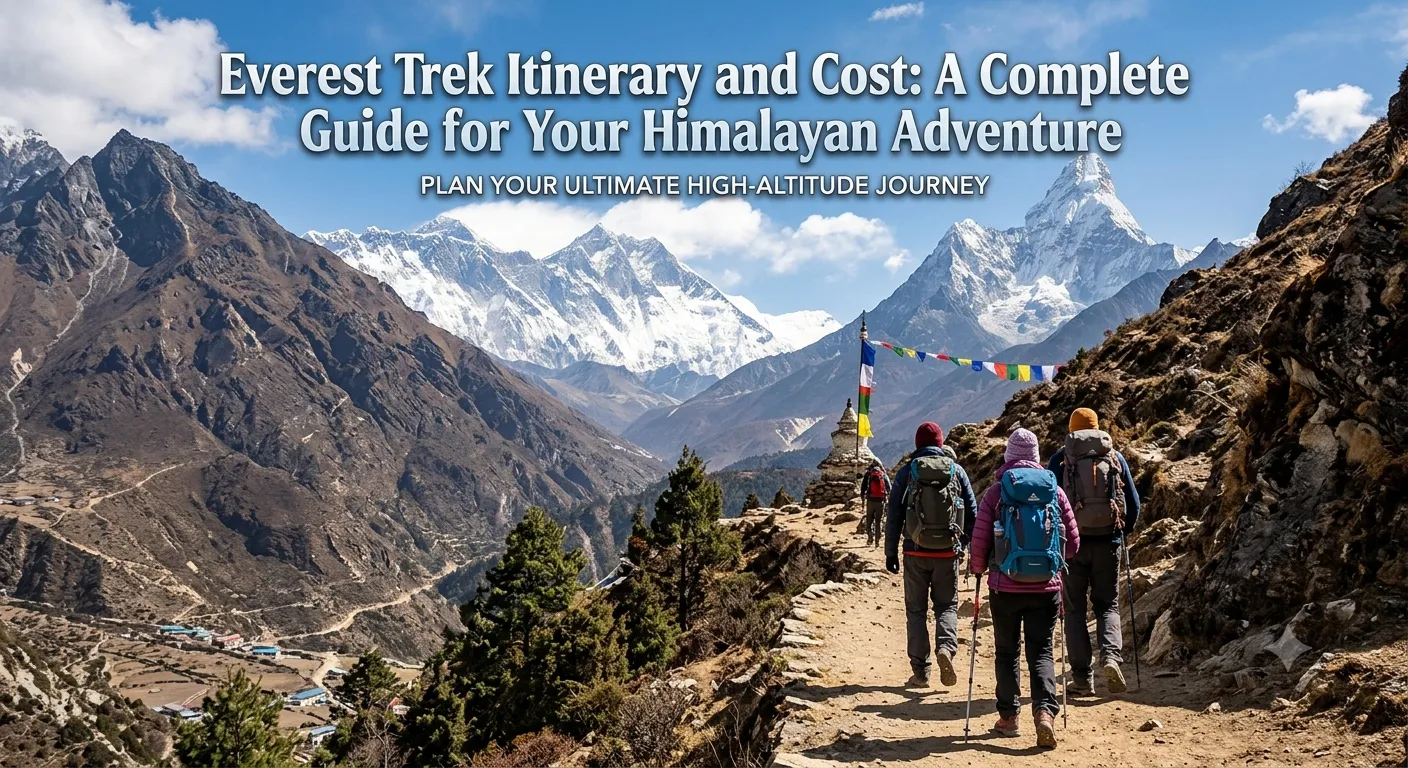
The Everest region is one of the most spectacular trekking destinations in the world. Surrounded by towering Himalayan peaks, traditional Sherpa villages, ancient monasteries, and dramatic mountain landscapes, this journey offers an unforgettable experience. Before planning the adventure, understanding the Everest trek itinerary and cost is essential. A well-designed itinerary allows enough time for acclimatization, while a realistic budget helps travelers prepare for flights, permits, accommodation, food, guides, and other expenses.
The most popular route is the Everest Base Camp trek, which generally takes 12 to 16 days. The total cost varies according to the length of the journey, trekking season, level of service, accommodation preferences, and whether you travel independently or with an organized trekking company.
Overview of the Everest Trek
The classic Everest trek usually begins with a journey from Kathmandu to Lukla, the main gateway to the Khumbu region. From Lukla, trekkers follow scenic trails through Phakding, Namche Bazaar, Tengboche, Dingboche, Lobuche, and Gorak Shep before reaching Everest Base Camp.
The route passes through Sagarmatha National Park, a protected Himalayan region known for its exceptional mountain scenery and diverse natural environment. Along the way, trekkers enjoy views of Mount Everest, Lhotse, Nuptse, Ama Dablam, Thamserku, and many other impressive peaks.
A standard itinerary includes acclimatization days because the route reaches very high elevations. Proper pacing is one of the most important factors for a safer and more enjoyable trek.
Standard Everest Trek Itinerary
The following 14-day plan is a common option for travelers seeking a balanced trekking schedule.
Day 1: Kathmandu to Lukla and Trek to Phakding
The adventure begins with a flight to Lukla. After arrival, the trek follows a relatively gentle trail toward Phakding. This first day is usually short and provides a comfortable introduction to the region.
Day 2: Phakding to Namche Bazaar
The trail crosses suspension bridges, passes small settlements, and gradually climbs toward Namche Bazaar. This is one of the more demanding early stages of the trek.
Day 3: Acclimatization Day in Namche Bazaar
A rest and acclimatization day is important. Trekkers may take a short hike to nearby viewpoints and explore the lively mountain town.
Day 4: Namche Bazaar to Tengboche
The trail offers beautiful Himalayan views before descending and climbing toward Tengboche. The famous monastery and surrounding mountain scenery make this a memorable stop.
Day 5: Tengboche to Dingboche
The journey continues through forests and high-altitude settlements. As elevation increases, the landscape becomes more open and rugged.
Day 6: Acclimatization Day in Dingboche
Another acclimatization day helps the body adjust to reduced oxygen levels. Short hikes to higher viewpoints are commonly included.
Day 7: Dingboche to Lobuche
The trail climbs gradually through a dramatic alpine environment. Trekkers begin to feel closer to the highest mountains of the Everest region.
Day 8: Lobuche to Everest Base Camp via Gorak Shep
This is one of the most anticipated days. Trekkers first reach Gorak Shep and then continue to Everest Base Camp. After enjoying the extraordinary surroundings, the route returns to Gorak Shep for the night.
Day 9: Kala Patthar Hike and Trek to Pheriche
An early morning climb to Kala Patthar provides outstanding panoramic views of Everest and nearby Himalayan peaks. Afterward, trekkers descend toward Pheriche.
Day 10: Pheriche to Namche Bazaar
The return journey continues through familiar villages and beautiful mountain landscapes.
Day 11: Namche Bazaar to Lukla
Trekkers descend toward Lukla, completing the main walking section of the adventure.
Day 12: Lukla to Kathmandu
A flight returns travelers to Kathmandu. Extra days are often recommended because mountain flights can be affected by weather conditions.
This schedule can be extended to 14 or 16 days by adding arrival, departure, sightseeing, or contingency days.
Everest Trek Cost Breakdown
When researching the Everest trek itinerary and cost, travelers should understand that there is no single fixed price. A standard Everest Base Camp trek may cost approximately USD 1,300 to USD 3,500 per person, depending on services and travel style. Luxury packages can cost considerably more.
Major expenses generally include:
-
Flights: Domestic flights connected with Lukla are a significant part of the budget.
-
Permits: Trekkers should budget for required local and protected-area entry permits.
-
Accommodation: Basic teahouses are more affordable, while upgraded rooms increase the overall price.
-
Meals: Food becomes more expensive at higher elevations because supplies must be transported into remote areas.
-
Guide and porter services: Hiring experienced trekking staff adds cost but can provide valuable logistical support.
-
Travel insurance: Suitable insurance for high-altitude trekking and emergency evacuation is strongly recommended.
-
Personal expenses: Wi-Fi, battery charging, hot showers, snacks, bottled drinks, tips, and equipment rentals may not be included in a standard package.
Factors That Affect the Total Cost
The final price depends heavily on the season and type of service. Spring and autumn are the busiest trekking periods, and demand for flights and accommodation is often higher. Private treks usually cost more than group departures, while premium lodges and customized services can significantly increase the budget.
The length of the itinerary also matters. Additional acclimatization days, side trips, helicopter returns, or extensions to destinations such as Gokyo can raise the total expense. Travelers should carefully compare package inclusions rather than choosing a trek based only on the lowest advertised price.
Best Time for an Everest Trek
Spring, particularly March to May, and autumn, especially September to November, are widely considered favorable trekking periods. These seasons often provide better visibility and suitable trail conditions. Winter trekking is possible for well-prepared travelers, but temperatures can be extremely cold. The summer monsoon period may bring clouds, rain, and flight disruptions.
Tips for Planning Your Everest Adventure
Good preparation can make the trek more comfortable and manageable. Choose an itinerary with sufficient acclimatization days, train before departure, carry suitable layered clothing, and avoid rushing at high altitude. It is also wise to keep extra money for unexpected delays and personal expenses.
Travelers should review exactly what a trekking package includes. Some prices cover permits, guides, accommodation, domestic transportation, and selected meals, while others exclude several important services.
Everest Trekking Alternatives: Discover Less-Crowded Himalayan Adventures
The Everest region is one of the most famous trekking destinations in the world. Every year, travelers arrive in Nepal with dreams of seeing Mount Everest and walking through dramatic Himalayan landscapes. However, the classic Everest Base Camp route is not the only option for those seeking mountain scenery, cultural experiences, and rewarding trekking adventures. Several excellent Everest trekking alternatives offer quieter trails, diverse landscapes, authentic villages, and unforgettable views.
Choosing an alternative trek can be ideal for travelers who want to avoid busy routes or explore a different side of the Himalayas. From peaceful valleys to high mountain passes, Nepal offers many trekking experiences that can match the beauty and excitement of the Everest region.
Why Consider Everest Trekking Alternatives?
The Everest Base Camp trek is popular for good reason. It offers spectacular views, Sherpa culture, famous villages, and the opportunity to reach the base of the world’s highest mountain. Yet its popularity also means that certain sections of the trail can become crowded, especially during the main trekking seasons.
Travelers may also look for alternatives because of budget, available time, fitness level, altitude concerns, or a desire for a more remote experience. Some Everest trekking alternatives provide lower-altitude routes, while others offer challenging high-pass adventures. This variety allows trekkers to select a journey that suits their personal goals.
Annapurna Circuit Trek
The Annapurna Circuit is one of Nepal’s most celebrated long-distance trekking routes. It passes through changing landscapes, traditional settlements, forests, dry mountain terrain, and high-altitude areas. One of the main highlights is crossing Thorong La Pass at approximately 5,416 meters.
For trekkers who want a major Himalayan adventure without following the Everest Base Camp trail, the Annapurna Circuit is an excellent choice. The route provides remarkable mountain scenery and significant cultural diversity. Trekkers can experience different communities, architectural styles, and natural environments throughout the journey.
Manaslu Circuit Trek
The Manaslu Circuit is among the best options for travelers seeking a quieter and more remote adventure. The route circles Mount Manaslu, the eighth-highest mountain in the world, and passes through traditional villages and rugged Himalayan terrain.
A major highlight is the crossing of Larkya La Pass, a demanding high-altitude section that rewards trekkers with extraordinary mountain views. Compared with heavily visited trekking corridors, the Manaslu region often feels more isolated and adventurous.
Among the many Everest trekking alternatives, the Manaslu Circuit stands out for its combination of wilderness, cultural depth, and challenging terrain. It is particularly attractive to experienced trekkers who value remote landscapes.
Langtang Valley Trek
The Langtang Valley Trek is a practical choice for travelers who want beautiful Himalayan scenery without committing to a very long expedition. The region is relatively accessible from Kathmandu and offers forests, mountain valleys, traditional settlements, and impressive peaks.
The trail passes through areas influenced by Tibetan culture and provides opportunities to experience local hospitality. Kyanjin Gompa is one of the best-known destinations in the valley, surrounded by dramatic mountain scenery.
For trekkers with limited time, Langtang is one of the most appealing Everest trekking alternatives. It combines accessibility, natural beauty, and cultural interest in a manageable itinerary.
Annapurna Base Camp Trek
The Annapurna Base Camp Trek is another outstanding Himalayan journey. Instead of approaching Mount Everest, trekkers enter a remarkable mountain sanctuary surrounded by towering peaks.
The route typically passes through villages, terraced landscapes, forests, and increasingly dramatic alpine terrain. At Annapurna Base Camp, trekkers enjoy close views of the surrounding mountain giants.
This trek is suitable for travelers who still want the excitement of reaching a famous Himalayan base camp but prefer a destination outside the Everest region. The combination of diverse landscapes and magnificent mountain views makes it a strong alternative.
Mardi Himal Trek
Mardi Himal is a shorter trekking option in the Annapurna region. It has gained popularity because of its scenic ridges and impressive views of Machapuchare and the Annapurna range.
The trek is particularly suitable for travelers with limited time who still want a rewarding mountain experience. The route includes forests, open ridgelines, and high viewpoints. Although Mardi Himal has become better known in recent years, it can still provide a different atmosphere from Nepal’s busiest classic trails.
For those comparing shorter Everest trekking alternatives, Mardi Himal deserves serious consideration.
Upper Mustang Trek
Upper Mustang offers a completely different type of Himalayan adventure. Its dry landscapes, ancient settlements, caves, monasteries, and Tibetan-influenced culture create an atmosphere unlike the green valleys found in many other trekking regions.
The journey is less about dense forests and more about dramatic cliffs, open terrain, historic villages, and cultural discovery. Upper Mustang is especially attractive to travelers interested in history, traditional lifestyles, and distinctive landscapes.
It can be more expensive than some standard trekking routes because of special permit requirements, but the experience is highly distinctive.
Kanchenjunga Base Camp Trek
Trekkers searching for true remoteness may consider the Kanchenjunga region in eastern Nepal. This demanding adventure explores landscapes near Kanchenjunga, the world’s third-highest mountain.
The region receives fewer visitors than Nepal’s most famous trekking areas. Long itineraries, remote terrain, and limited infrastructure make the trek better suited to experienced and well-prepared travelers. In return, trekkers can experience dramatic wilderness and a strong sense of expedition.
Choosing the Right Alternative Trek
The best trek depends on personal priorities. Travelers should consider available days, physical fitness, previous altitude experience, preferred comfort level, budget, season, and interest in culture or wilderness.
Those seeking convenience may prefer Langtang Valley. Trekkers wanting a classic base camp experience can choose Annapurna Base Camp. Adventure-focused travelers may find Manaslu Circuit more appealing, while those interested in distinctive culture and landscapes can explore Upper Mustang.
Proper acclimatization is essential for high-altitude routes. Weather conditions can change rapidly in the mountains, so appropriate clothing, reliable equipment, travel insurance, and a flexible itinerary are important.
Final Thoughts
Nepal offers far more than a single famous trekking route. The country is filled with spectacular valleys, remote mountain passes, traditional villages, and diverse cultural landscapes. Exploring Everest trekking alternatives can lead travelers toward quieter paths and equally memorable Himalayan experiences.
Whether you choose the Annapurna Circuit, Manaslu Circuit, Langtang Valley, Mardi Himal, Upper Mustang, or Kanchenjunga, each destination has its own character. The right alternative can provide breathtaking scenery, meaningful cultural encounters, and a powerful sense of adventure while revealing a different side of Nepal’s extraordinary Himalayas.
